

Do You Need IT in Your Business? (2025 Edition)

Do You Need IT in Your Business? (2025 Edition)

By Femi Ashiru — Software Architect & Digital Transformation Consultant

Technology is no longer a luxury or a departmental choice — it’s the invisible infrastructure behind every successful business in 2025.

The New Reality of Business

A decade ago, many small business owners asked, “Do I really need IT in my business?” In 2025, the answer is clear: IT is the foundation of modern business. It connects customers, operations, and data into one ecosystem. Whether you run a local bakery, design studio, logistics firm, or retail brand, your company already depends on technology — the only question is how strategically you use it.

What IT Really Does

IT isn’t about servers or complexity — it’s about efficiency, automation, and insight. Applied correctly, technology helps you:

  • Eliminate manual, repetitive processes.
  • Centralize information to make informed decisions.
  • Collaborate seamlessly across teams and time zones.
  • Protect customer data and company records.
  • Scale faster without unnecessary overhead.

A Practical Example: The Baby Food Business

Imagine a small company that produces organic baby food. The founder tracks sales and inventory manually — spreadsheets, notebooks, and messages from sales reps. Every week, the team visits stores, counts stock, and sends updates by phone. By the time numbers are entered into Excel, popular products are sold out.

Now imagine the same business with a simple cloud system:

  • Sales agents log store activity on their phones.
  • Stock and expiry dates update automatically.
  • Invoices generate instantly after each sale.
  • Payments sync with QuickBooks or Zoho Books.
  • AI dashboards summarize best-performing stores and SKUs.

Result: no missed opportunities, fewer stockouts, and less stress. That’s digital transformation in action.

From IT to Digital Transformation

Today, “IT” has evolved into digital transformation — the continuous improvement of business performance using digital tools, data, and AI. You don’t need a big IT department. Affordable, cloud-based solutions provide enterprise-grade capability for any team size.

Function Modern Tools Benefit
Collaboration Google Workspace, Microsoft 365, Notion Real-time docs, shared knowledge
CRM HubSpot, Zoho, Pipedrive Lead tracking, automated follow-ups
Accounting QuickBooks, Xero, Wave Instant invoicing, cash-flow visibility
Marketing Automation Mailchimp, ActiveCampaign, HubSpot Nurture journeys, segmentation
AI Assistants ChatGPT, Copilot, Claude Summaries, reporting, content drafts
Project Delivery ClickUp, Asana, Monday.com Timelines, accountability, workflows

Automation in Practice

Every hour spent on repetition can be automated. When a customer places an order online, your system can:

  1. Generate an invoice automatically;
  2. Update stock levels in real time;
  3. Add the client to your CRM;
  4. Send a thank-you email or WhatsApp message;
  5. Notify your logistics team for delivery.

Automation doesn’t remove people; it frees them to focus on creativity, relationships, and growth.

The Rise of Data & AI Analytics

Modern systems don’t just store data — they learn from it. Tools like Power BI, Google Looker Studio, and Tableau Cloud analyze performance in real time, helping you predict demand and optimize operations. AI can highlight seasonal trends, forecast stock, and identify customers likely to reorder.

Collaboration, Security & Scalability

Cloud collaboration enables secure, anywhere access. Role-based permissions protect sensitive data, while built-in backups provide resilience. Need to add ten team members or expand to a new region? Cloud infrastructure scales in minutes, not months.

The True Purpose of IT

IT isn’t about replacing people — it’s about empowering them. Used intentionally, technology simplifies processes, improves decision-making, builds transparency, and creates space for innovation. It helps you work on your business, not just inside it.

Final Thoughts

The question is no longer “Do you need IT in your business?” It’s “Which technologies will help your business grow next?”

Use IT as a strategic partner — not just a tool — and you’ll operate with the clarity, precision, and impact of any global enterprise.

Let’s talk digital transformation. If you’re ready to modernize operations with automation and AI, contact me.


Building a Full-Service Laundry Platform with Real-Time Tracking and Multi-Role Automation

Building a Full-Service Laundry Platform with Real-Time Tracking and Multi-Role Automation

When a leading dry-cleaning service provider sought to modernize its operations,
Opus Hive was selected to design and build a digital platform that unified customers, drivers,
and staff into a single real-time ecosystem.

The challenge was not just to build an app—but to engineer a smart service-management platform
capable of handling thousands of orders and supporting multiple roles while remaining responsive under
limited connectivity conditions.

The Challenge

  • Manual scheduling led to missed pickups and delivery delays.
  • Customers lacked visibility once items left their premises.
  • Internal coordination between branches was fragmented.
  • Data entry and reconciliation were inconsistent and error-prone.

Our task: digitize the entire value chain while keeping the platform intuitive for both customers and staff.

Our Solution

Opus Hive developed an integrated system comprising five core modules:

  • Customer App (iOS, Android, Web): Order placement, wallet payments, notifications, and real-time tracking.
  • Driver App: Trip scheduling, navigation, customer contact, and incident reporting.
  • Laundry Manager App: Order tagging, progress updates, and branch-level monitoring.
  • Front Desk Dashboard: Customer support, order management, and reporting.
  • Finance Console: Analytics, refunds, and service configuration.

All modules were interconnected through an offline-capable backend that synchronized data and notifications across all actors.

Technical Highlights

  • Unified Node.js-based API layer ensuring consistent data flow and versioning.
  • Offline synchronization via IndexedDB + service workers.
  • WooCommerce integration for service catalog, pricing, and automated orders.
  • Push-notification system (Firebase + custom webhooks) for progress alerts.
  • Analytics dashboard aggregating metrics for order volume, turnaround time, and customer satisfaction.

Implementation Strategy

We adopted an iterative delivery model, working closely with the client’s management team to validate each module during pilot testing.
Continuous feedback ensured that every workflow matched real-world operations.

Results

  • Customer tracking satisfaction increased dramatically.
  • Average turnaround time dropped by over 30 percent.
  • Branch managers gained real-time visibility into performance metrics.
  • Delivery reliability and engagement improved significantly.

Conclusion

This project exemplifies Opus Hive’s commitment to intelligent software and seamless integration. By combining robust
architecture with user-centered design, we helped a traditional service provider transform into a digital-first enterprise.

Looking to automate your service business or streamline multi-role workflows?
Talk to our team →


A Website That Gives You Value - 2025 Edition


🚀 A Website That Gives You Value

Updated & Polished Article (2025 Edition)

If you're an entrepreneur or business owner, you've probably spent a lot of time thinking about your website — the design, the "About Us" page, the products, the contact page, and maybe even a gallery or blog. You might have worked closely with your designer, insisting on all the "standard" pages everyone seems to have.

And then, when the site finally goes live, you sit back and wait for the world to notice. You tell a few friends, post a link on WhatsApp or Instagram, and expect traffic to roll in. Days pass. The only messages you receive are from bots or random people trying to sell vitamins or "SEO services."

You quickly realize that having a website doesn't automatically mean having visibility, engagement, or customers.

⚠️ Why Many Websites Fail to Deliver Value

😴

Static Website

Online brochure
Rarely updated
Disconnected
No engagement

🎯

Value-Driven Website

Dynamic content
Regular updates
Connected ecosystem
Converts visitors

Most business owners treat their website as an online brochure — static, rarely updated, and disconnected from their daily operations. They post a few pages, list their services, and wait for magic. But a website's true value isn't in its existence — it's in how it attracts, engages, and converts visitors into customers.

Your Website in 2025 is Your:

🏪
Digital Storefront
📊
Data Source
🤖
AI Training Ground

Owned Channel

💎 Defining "Value" by Business Type

🛒

E-commerce

Direct sales, repeat customers, basket value

💼

Consulting

Enquiries, quotes, bookings

📰

Media

Views, shares, returning readers

👗

Fashion & Retail

Walk-in customers from online

🎪

Events & NGOs

Registrations, donations, sign-ups

The real question is: Does your website generate measurable outcomes that contribute to your goals?

🎯 How to Create a Website That Delivers Value

  1. Get Found (Visibility)

    Search engines, social media, and AI-driven recommendations are your discovery tools.

    • Use Search Engine Optimization (SEO) strategically — tools like Yoast SEO or Surfer AI help you write optimized articles.
    • Use keywords and natural language people are likely to speak into AI assistants or voice search ("Hey Siri, best tailor in Lekki").
    • Create useful, searchable blog content. AI and search engines now prioritize "authentic expertise" over keyword stuffing.
    • Consider AI-generated summaries, short "how-to" videos, and voice-friendly snippets.
  2. Leverage AI & Automation

    OpenAI Assistants
    ManyChat
    Tidio
    Hotjar
    Google Analytics 4
    Microsoft Clarity
    • Integrate AI chatbots to answer FAQs, schedule bookings, or route customer queries automatically.
    • Use AI-driven analytics tools to watch real customer behavior.
    • Automate repetitive updates — sync with Instagram catalog, Shopify, or Google Business profile.
  3. Integrate Social Media Intelligently

    In Nigeria and beyond, most retailers rely heavily on Instagram, WhatsApp, and TikTok — but that doesn't mean the website is obsolete.

    • Link your social posts back to unique landing pages (e.g., "/promo/friday-special").
    • Track engagement by using UTM links in your bio.
    • Use embedded social feeds and automated posting tools (Buffer, Later, or Hootsuite).
    • Create short, mobile-first landing pages that convert traffic from your posts directly into leads.
  4. Create Landing Pages That Convert

    Every page should have a purpose and a clear call-to-action (CTA):

    📅 Book a Table
    📥 Download Catalogue
    💬 Chat with Sales
    🛍️ Order Now

    CTAs convert attention into measurable value. Use automation tools (HubSpot, Zoho CRM, or Mailchimp) to follow up with visitors automatically.

  5. Invest in Design & User Experience

    60%

    of visitors leave a slow, cluttered website within seconds

    85%

    of Nigerian web traffic in 2025 is mobile

    • Use modern, lightweight frameworks like Next.js, Framer, or Webflow.
    • Prioritize mobile optimization.
    • Ensure your visuals match your brand tone; if you're in fashion, show your products on real people, not just flat fabrics.

🔍 SEO, Hashtags, and Discoverability

The Modern Discovery Journey

🗣️

Voice Search: "Hey Siri, best tailor in Lekki"
🤖

AI Assistant: Curated recommendations from web content
📱

Social Feed: TikTok/Instagram discovery
🎯

Your Website: Conversion happens here

The principles of SEO haven't changed much — but now they include AI discoverability and social graph visibility.

  • Use hashtags like keywords for your brand, but choose ones that align with trends in your region (#MadeInNigeria, #LagosFashion, #NaijaTech).
  • Combine your own branded tag with trending ones.
  • Use AI content assistants (like ChatGPT or Jasper) to suggest trending topics and improve readability.
  • Invest in backlinks — collaborations, features on reputable sites, and guest posts.

In 2025, it's more about "appearing where your customers already are" — whether that's in their TikTok feed, AI assistant answers, or mobile searches.

📊 Measuring Success

Key Success Metrics

✉️

Newsletter Subscriptions: Did a visitor subscribe?
📥

Lead Magnets: Did someone download your guide?
📅

Bookings: Did they book a consultation?
📈

Data Collection: Does your site help you make better business decisions?

🎨 Designing for Conversion

Web design in 2025 is guided by behavioral data and AI-driven personalization.

AI-Driven Personalization in Action

🔄

Returning Visitor

Shows personalized discount

📍

Location-Based

Changes content by region

🕒

Behavior-Based

Adapts to previous visits

Use heatmaps, A/B testing, and predictive analytics to improve performance continually.

💡 The Modern Marketing Mindset

Building a website isn't the end — it's the beginning.

The real work happens in content creation, analytics, and iteration. Successful entrepreneurs today use a mix of:

✍️

Regular blog posts (AI-assisted or human-authored)
📊

SEO monitoring dashboards
📧

Integrated CRM + newsletter tools
🔄

Automated social content pipelines (TikTok → Instagram → Blog → LinkedIn)

Your Digital Ecosystem

YOUR WEBSITE
📱 Social Media
🤖 AI Bots
👥 Customer Database
📊 Analytics

🎯 Conclusion

A website in 2025 isn't just a place to "show who you are."

🤝

24/7 Digital Sales Agent

🎯

AI Content Engine

📊

Data Hub

Whether you're a fashion brand, consultant, or retailer, your website must integrate content, automation, and customer intelligence to stay relevant.

The goal hasn't changed — it's still about value.

But now, value means visibility, conversion, and insight — powered by data, amplified by AI.


A Website That Gives You Value

A Website That Gives You Value

If you’re an entrepreneur or business owner, you’ve probably spent a lot of time thinking about your website — the design, the “About Us” page, the products, the contact page, and maybe even a gallery or blog. You might have worked closely with your designer, insisting on all the “standard” pages everyone seems to have.

And then, when the site finally goes live, you sit back and wait for the world to notice. You tell a few friends, post a link on WhatsApp or Instagram, and expect traffic to roll in. Days pass. The only messages you receive are from bots or random people trying to sell vitamins or “SEO services.”

You quickly realize that having a website doesn’t automatically mean having visibility, engagement, or customers.

Why Many Websites Fail to Deliver Value

Most business owners treat their website as an online brochure — static, rarely updated, and disconnected from their daily operations.
They post a few pages, list their services, and wait for magic. But a website’s true value isn’t in its existence — it’s in how it attracts, engages, and converts visitors into customers.

In 2025, this has become even more important. Your website is your digital storefront, your data source, and your AI training ground. Social media (Instagram, X, TikTok, Threads, LinkedIn, and Facebook) drives discovery, but your website remains the one channel you fully own — your content, your analytics, your customer data.

Defining “Value”

Value depends on your type of business:

  • E-commerce: Direct sales, repeat customers, and basket value.
  • Consulting or Service Firms: Enquiries, quote requests, or bookings.
  • Media Companies: Views, shares, comments, and returning readers.
  • Fashion & Retail: Walk-in customers who discovered you online.
  • Clubs, Events, or NGOs: Registrations, donations, or community sign-ups.

The real question is: Does your website generate measurable outcomes that contribute to your goals?

How to Create a Website That Delivers Value

  • Get Found (Visibility)
    Search engines, social media, and AI-driven recommendations are your discovery tools.
  • Use Search Engine Optimization (SEO) strategically — tools like Yoast SEO or Surfer AI help you write optimized articles.
  • Use keywords and natural language people are likely to speak into AI assistants or voice search (“Hey Siri, best tailor in Lekki”).
  • Create useful, searchable blog content. AI and search engines now prioritise “authentic expertise” over keyword stuffing.
  • Consider AI-generated summaries, short “how-to” videos, and voice-friendly snippets that help you appear in rich search results.
  • Leverage AI & Automation
  • Integrate AI chatbots (e.g., OpenAI Assistants, ManyChat, or Tidio) on your website to answer FAQs, schedule bookings, or route customer queries automatically.
  • Use AI-driven analytics tools like Hotjar, Google Analytics 4, or Microsoft Clarity to watch real customer behaviour.
  • Automate repetitive updates — sync your website with your Instagram catalog, Shopify, or Google Business profile to keep information consistent.
  • Integrate Social Media Intelligently
    In Nigeria and beyond, most retailers rely heavily on Instagram, WhatsApp, and TikTok — but that doesn’t mean the website is obsolete.
  • Link your social posts back to unique landing pages — e.g., “/promo/friday-special.”
  • Track engagement by using UTM links in your bio.
  • Use embedded social feeds and automated posting tools (Buffer, Later, or Hootsuite).
  • Create short, mobile-first landing pages that convert traffic from your posts directly into leads.
  • Create Landing Pages That Convert
    Every page should have a purpose and a clear call-to-action (CTA):
  • “Book a Table,” “Download Catalogue,” “Chat with Sales,” or “Order Now.”
  • CTAs convert attention into measurable value.
  • Use automation tools (HubSpot, Zoho CRM, or Mailchimp) to follow up with visitors automatically.
  • Invest in Design & User Experience
  • A slow, cluttered website loses 60% of visitors within seconds.
  • Use modern, lightweight frameworks like Next.js, Framer, or Webflow.
  • Prioritize mobile optimization — 85% of Nigerian web traffic in 2025 is mobile.
  • Ensure your visuals match your brand tone; if you’re in fashion, show your products on real people, not just flat fabrics.

SEO, Hashtags, and Discoverability

The principles of SEO haven’t changed much — but now they include AI discoverability and social graph visibility.

  • Use hashtags like keywords for your brand, but choose ones that align with trends in your region (#MadeInNigeria, #LagosFashion, #NaijaTech).
  • Combine your own branded tag with trending ones.
  • Use AI content assistants (like ChatGPT or Jasper) to suggest trending topics and improve readability.
  • Invest in backlinks — collaborations, features on reputable sites, and guest posts.

Voice search, AI chatbots, and Google Discover have replaced the old idea of “rank #1 on Google.”
In 2025, it’s more about “appearing where your customers already are” — whether that’s in their TikTok feed, AI assistant answers, or mobile searches.

Measuring Success

Value isn’t just about sales — it’s about conversion and retention:

  • Did a visitor subscribe to your newsletter?
  • Did someone download your guide or book a consultation?
  • Did your site collect data that helps your business make better decisions?

If the answer is yes, your website is doing its job.

Designing for Conversion

Web design in 2025 is guided by behavioural data and AI-driven personalization.
Your website can now adapt to each visitor: showing a discount if they’re a returning user, or changing content based on their location or previous visits.
That’s the future of conversion — relevance and context.

Use heatmaps, A/B testing, and predictive analytics to improve performance continually.

The Modern Marketing Mindset

Building a website isn’t the end — it’s the beginning.
The real work happens in content creation, analytics, and iteration.
Successful entrepreneurs today use a mix of:

  • Regular blog posts (AI-assisted or human-authored).
  • SEO monitoring dashboards.
  • Integrated CRM + newsletter tools.
  • Automated social content pipelines (TikTok Reels → Instagram → blog snippet → LinkedIn post).

Your website should sit at the centre of your digital ecosystem — the anchor between your social presence, AI bots, and customer database.

Conclusion

A website in 2025 isn’t just a place to “show who you are.”
It’s your 24/7 digital sales agent, AI content engine, and data hub.
Whether you’re a fashion brand, consultant, or retailer, your website must integrate content, automation, and customer intelligence to stay relevant.

The goal hasn’t changed — it’s still about value.
But now, value means visibility, conversion, and insight — powered by data, amplified by AI.


© Article • Ready to embed on your site.


Architecting a Multi-App Ecosystem for a Leading Laundry Brand

Designing the Garment Care Platform: Architecting a Multi-App Ecosystem for a Leading Laundry Brand

When Garment Care—one of Nigeria’s most trusted dry-cleaning and laundry providers—approached me, their vision was clear:
build a seamless experience for customers who never want to visit a physical store again. They wanted a digital ecosystem that combined
convenience, real-time tracking, and complete transparency between their branches, drivers, and customers.

As Lead Solutions Architect, my responsibility was to translate that business vision into a scalable and maintainable
technical solution that could evolve with the company’s growth.

Identifying the Customer’s Needs

Our discovery sessions revealed four key challenges:

  • Lack of transparency: Customers couldn’t track garment status after pickup.
  • Operational delays: Communication between drivers, front desk, and laundry staff was manual and inconsistent.
  • Missed deliveries: Drivers lacked a structured schedule and real-time location tracking.
  • Fragmented data: Orders and payments were scattered across spreadsheets and local systems.

From these insights, I drafted a goal: build a unified platform connecting every participant—customers, drivers,
laundry staff, and managers—through synchronized apps and dashboards.

Architecting the Solution

I designed the system as a modular micro-app ecosystem, where each user group interacted through a tailored interface connected by a
common backend.

  • Customer App (iOS / Android / Web): Built with Ionic + REST APIs for ordering, payments, and driver updates.
  • Driver App: A micro-app for route navigation, delivery confirmations, and automated customer notifications.
  • Laundry Manager App: A browser tool for tagging, processing, and marking order progress through each cleaning stage.
  • Service Admin Dashboard: WordPress / WooCommerce portal to define services, set prices, and manage scheduling and analytics.

Each module communicated with a central service-management backend built with Node.js + MySQL, designed for offline
support and message queuing to handle Lagos’s sometimes-unreliable connectivity.

Key Technical Highlights

  • Real-time updates via Firebase push notifications and REST hooks.
  • Dynamic pricing using WooCommerce integration.
  • Offline-first micro-apps caching order data locally with auto-sync.
  • Geolocation tracking using Google Maps API.

The Result

The platform replaced Garment Care’s manual processes with a cohesive digital network that improved delivery accuracy, customer
satisfaction, and operational transparency. Customers could now place orders, track them in real time, and receive automated updates,
while internal teams gained visibility and analytics to drive efficiency.

Reflection

Architecting this system reaffirmed my belief that great software begins with empathy—understanding the customer’s pain points and
building technology that feels natural, not forced. Every constraint—from internet availability to device diversity—became an
opportunity to innovate.

Want to see more architecture case studies or discuss your own project?
Let’s collaborate →


conferences to attend or not to attend that is the question-min

Conferences - to attend? or not to attend? That is the question

So a few weeks ago whilst going through a backlog of emails after some time away on holiday. I saw three emails from the KNect365  group for the recently concluded NigeriaCom 2018, AfricaCom 2018 and Fintech Africa 2018 and all I could think of was hmm so many conferences but “to attend? Or not to attend? That is the question!”


It all took me back to when I first started ‘conferencing’. About four years ago, a friend in the industry Ugo Okoye asked me if I was going to the Mobile Web Africa conference (2012 edition). I told him I knew nothing about it and even if I did, what was the point? At the time I had over 11 years experience in the software industry in multiple countries across two continents, what could the conference possibly teach me that I didn’t already know? Yes, a very arrogant assumption on my part but thankfully I had an open mind.


He advised me to look beyond that because there was always so much to learn from what people in the Startup world were doing, the experiences, challenges and breakthroughs. So after deliberating I decided to go for my first conference “Mobile Web Africa 2012” in Johannesburg, South Africa.


There’s a first time for everything


I remember being nervous about what to expect, would it be full of high end professionals? Would it be a shambles? Would it be relevant? Would it be well organised? What should I expect? In the end I was pleasantly surprised, there were a lot of talks and panels about whether to build a mobile web app or a mobile app, about how to monetize these solutions, how to target and educate consumers and most especially whether to go with a B2B solution or a B2C solution.


At that point in time, the more interesting players were the likes of Eskimi, Mixit, 2go, IRocking and a host of other Social Media/B2C focused apps and solutions e.g. Saya. It was truly exciting as at the time we planned on building similar platforms as I thought they were the best ways to scale in Africa. However I got discouraged from the experiences of the founders, even though they had built successful companies and I gained a lot of tips about what tech platforms to use/not to use. I didn't like that fact that most of them were not directly monetizable i.e. consumers would not pay for services and instead they relied on traction to build a large product base which they would then monetize via advertising or other means.


The different strategies had a profound development on my psyche and business approach ie: what solutions are right for Africa, the cost of building and maintaining a platform and how to monetize. From this event I made it my mission to go to at least two conferences a year, to know what was new in the startup/tech space, meet and network with founders and possible clients, and to validate the ideas and solutions my company was working on.


The journey begins


Since that time I had visited Mobile Web West Africa 2013, Mobile Web West Africa 2015 Tech4Africa 2015, AfricaCom 2017, TechPoint Nigeria, Global Blockchain Congress 2018 and a few Hackathons.

All with exciting agendas and keynote speakers promising insights into the latest Tech revolutionising the industry, exciting start-ups and lots of networking. I would say that many delivered to my expectations but some did fall shy of my expectations. You always learn something new but the question is, did you learn enough to justify the expense of the trip and disruptions to your schedule at home? So i came to summarise the most important things for me, in this priority:

  1. Ability to meet potential new clients and partners for collaboration
  2. Opportunity to learn from Industry leaders and startups engaged in areas/sectors that i found interesting from a business point of view
  3. Discover and learn about key new technologies and trends that my company should get involved with in future as part of our Africa expansion strategy.


In practice my second and third objectives were typically met but the first one not so much, as so far in my experiences the conferences have tended to attract more like minds (tech founders and industry players) than potential customers.  It's been interesting to observe the tech trends over time and to see where they are now;

  • 2012 - 2014
    • Digital Marketing
    • Mobile Music & Streaming Apps
    • Messaging Apps
    • Social Media Apps and many Facebook like "me too’s "
  • 2014 - 2016
    • eCommerce Platforms
  • 2017
    • FinTech
    • IoT
    • AI
    • BlockChain
    • Drone Tech

As a whole going to these conferences has helped me in my career and development of my company. It's allowed me to learn from people in the industry at different stages of growth and also share my experiences and expertise as well.


This year’s agenda


The AfricaCom 2017 event was by far the best conference I have attended. It had the widest range of industry sectors from the major Mobile Network Operators, FinTech Utilisers and Players to digital media firms, startups and new technology enthusiasts. Last year's event truly exposed me to the opportunities in BlockChain Technology and how they could be utilised to revolutionise businesses and key sectors in Africa.


I also met many key players in the Tech industry in Nigeria and some other African countries who I’m still in touch with and have developed growing business links and opportunities with.


Based on this experience I finally decided to go to the AfricaCom 2018 Conference. My major port of call shall be the AHUB and AfricaCom 20/20 sections, these are the areas at the conference that tend to focus on startup software firms as well as new technologies e.g. Blockchain, AI and IoT.


This year I will be looking forward to meeting interesting individuals and businesses that we can work with next year and so yes I will be judging the success of the conference based on how many leads I can convert after the speeches and drinking is over :) .


I’ll also be interested to see how the tech that was pioneered last year as the next big thing in Africa specifically AI, IoT and Blockchain have taken off and see what opportunities we as a company could take advantage of in those sectors.


Final thoughts


I would recommend attending tech conferences as a must for anyone in the industry, depending on the stage of development of your career or company, you could either:

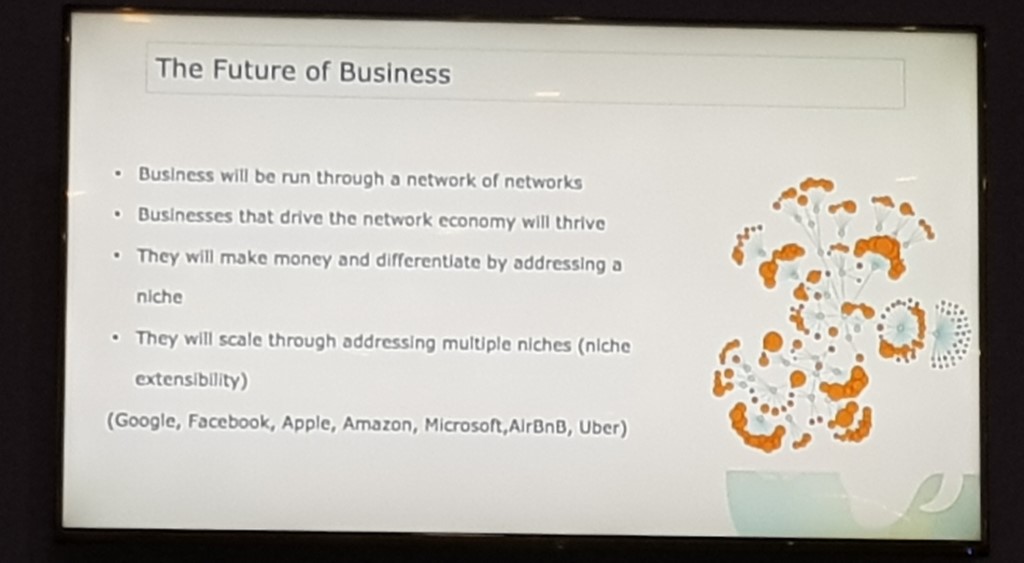
 

  1. Find out about new technologies and business opportunities across the continent
  2. Learn from founders about what techniques they used to manage their teams and grow their business.
  3. Learn how to pitch to raise funding for your platform or to scale up after the initial MVP stage.
  4. And finally to network and meet exciting people that you can continue to build links with.


Personally I’ll recommend the Knet365 Africa focussed group of events anyday!

Ps: this isn't a sponsored post, its just my humble opinion :)